
Category Archives: VPS
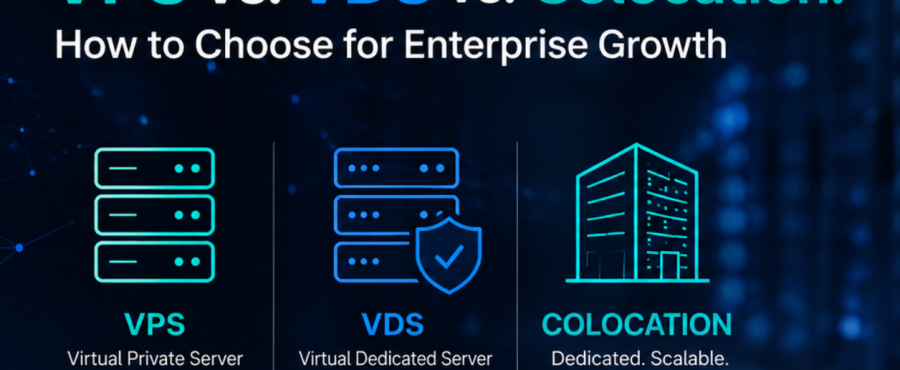
VPS vs. VDS vs. Colocation: How to Choose for Enterprise Growth
Lightwave Networks helps businesses evaluate infrastructure options that can support performance, control, and long-term scalability. For many growing organizations, that evaluation starts with a simple question: should the business use a VPS, move to a VDS, or consider colocation?
A virtual private server can be useful when a company needs flexible hosting without managing physical hardware. A virtual dedicated server may be a better fit when the business needs more predictable virtual resources. Colocation becomes more relevant when growth requires dedicated hardware, stronger control, private networking, or a data center environment built around long-term infrastructure planning.
What Is a VPS?
A VPS, or virtual private server, is a virtualized server environment created from part of a physical server. It gives the customer access to allocated resources and administrative control, while a provider manages the underlying hardware.
VPS hosting can work well for websites, applications, and business systems that need more control than basic shared hosting. It is often practical when a company wants hosting flexibility without purchasing or managing physical hardware.
The limitation is that a VPS still depends on the provider’s virtualized infrastructure model. Performance, resource allocation, and scalability can vary by plan, configuration, and provider design. For systems that need predictable performance, a VPS may eventually feel restrictive.
What Is a VDS?
A VDS, or virtual dedicated server, is also virtualized, but it is usually positioned around more dedicated resource allocation. In many provider models, a VDS gives the customer reserved CPU, RAM, storage, or bandwidth resources that are less affected by other users on the same physical infrastructure.
That makes a VDS useful when a business wants the deployment advantages of virtualization but needs more predictable performance than a basic VPS plan may provide. A VDS may fit heavier applications, production systems, or business workloads where resource consistency matters.
The tradeoff is that a VDS still keeps the business inside a provider-controlled virtual environment. It can offer more consistency than a VPS, but it does not provide the same hardware ownership, physical access, or infrastructure control that colocation can support.
How Is Colocation Different?
Colocation is different because the business owns or controls the physical hardware and places it inside a third-party data center. The colocation provider supplies the facility environment, including space, power, cooling, security, network access, and support options.
For enterprise growth, colocation becomes relevant when infrastructure needs move beyond renting virtual resources. A business may need dedicated hardware, predictable performance, compliance control, specialized equipment, private networking, or long-term cost planning around physical assets.
Colocation is not automatically the right choice for every growing company. It creates more responsibility because the organization must plan, own, and maintain its hardware. However, it can be a stronger fit when control, durability, and infrastructure customization matter more than virtual-server convenience.
VPS vs. VDS vs. Colocation: What Should Businesses Compare?
The clearest comparison starts with the workload. If the business needs fast deployment, modest control, and flexible hosting for standard applications, a VPS may be enough. However, if it needs stronger resource consistency but still wants a virtualized environment, a VDS may be more appropriate. Also consider if it needs control over physical infrastructure, as colocation may be the better long-term model.
Performance is one of the biggest decision points. VPS performance depends on the provider’s resource allocation and shared-hardware design. VDS hosting is generally built to provide more predictable virtual resources. Colocation gives the business direct control over the hardware profile, which can support workloads that need dedicated compute, storage, or network architecture.
Scalability also looks different across the three models. VPS hosting can scale by changing plans or adding instances. VDS hosting can scale through larger virtual resource allocations. Colocation scales through physical infrastructure planning, including rack space, power capacity, bandwidth, cross-connects, and hardware expansion.
Operational responsibility is another key difference. VPS and VDS models shift more infrastructure management to the provider. Colocation gives the business more control but requires more planning around equipment, lifecycle management, and technical support.
How Does Enterprise Growth Affect the Decision?
Enterprise growth means a company is moving toward more sustainable, scalable operations. That can include revenue growth, new markets, larger customer bases, more complex applications, stronger security requirements, or more demanding internal systems.
A hosting model that works during an earlier stage may not support the next stage well. A VPS may be practical when the priority is speed and cost control. A VDS may help when workloads need more predictable resources. Colocation may make sense when the business needs dedicated infrastructure for long-term performance, compliance, networking, or operational resilience.
A company should choose the model that matches the current workload and the next phase of growth. Waiting too long can create performance limits, migration pressure, or infrastructure risk.
Choosing the Right Infrastructure Path
A VPS, VDS, and colocation data center each support a different stage of infrastructure growth. VPS hosting offers accessible virtual-server flexibility. VDS hosting can provide a more dedicated virtual-resource model. Colocation services support businesses that need physical infrastructure in a secure, professionally managed data center environment.
Lightwave Networks provides colocation services, cloud servers, VPS servers, and related infrastructure services for businesses evaluating how their systems should scale. If your organization is comparing VPS, VDS, and colocation options, start with the workload, control requirements, performance needs, and growth plan. Contact one of our engineers to discuss an infrastructure path that fits your next stage of growth.
VPS, VDS, and Colocation FAQs
What is the difference between VDS and VPS?
The main difference between VDS and VPS is resource allocation. A VPS uses allocated resources on shared physical infrastructure. A VDS is typically positioned with more reserved resources for more predictable performance.
Is colocation better than a VPS?
Colocation is not automatically better than a VPS. It is better suited for businesses that need physical hardware control, predictable infrastructure, private networking, or long-term data center capacity.
When should a business move from VPS to colocation?
A business may consider moving from VPS to colocation when virtual hosting no longer provides enough control, consistency, compliance support, or infrastructure flexibility.
RELATED READINGS:
Colocation Pricing Models Explained: Space, Power, and Bandwidth Costs

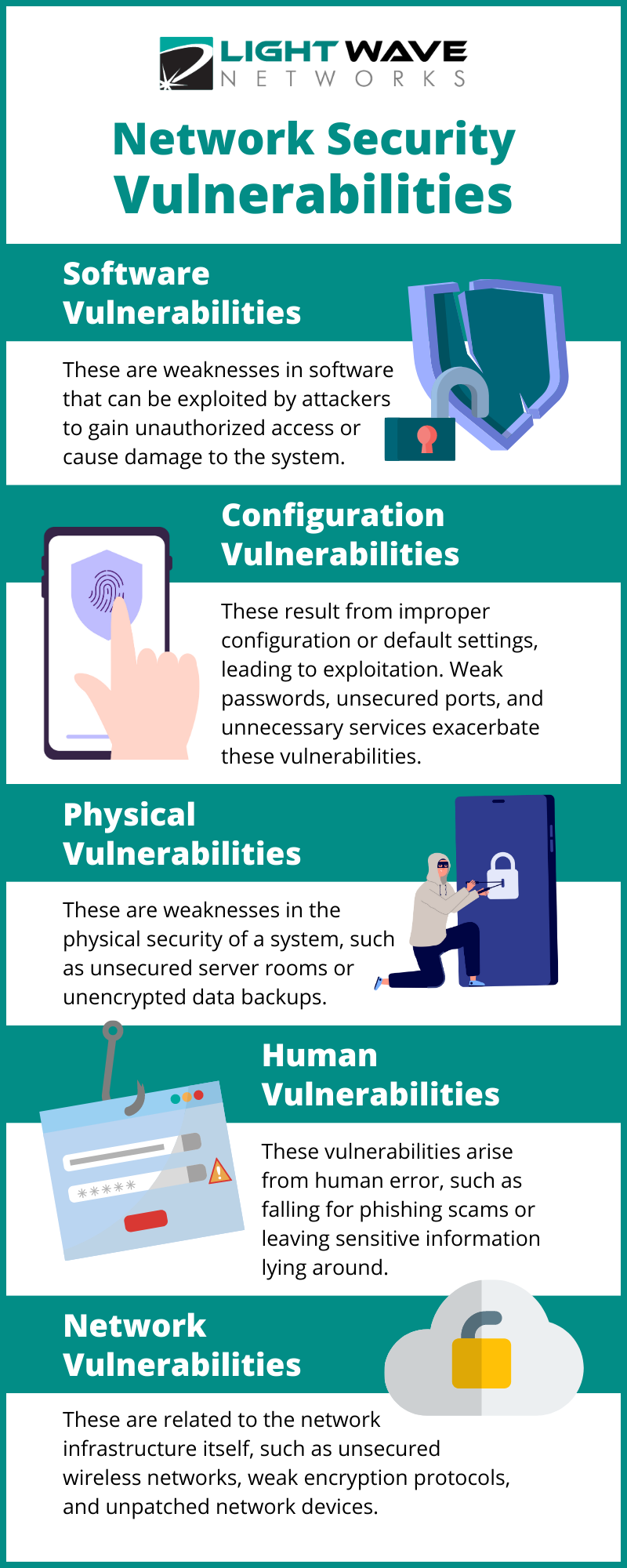
About Network Vulnerability
Network vulnerability is a weakness or flaw in a computer network system that can be exploited by an attacker to gain access to sensitive data or information. There are many vulnerabilities that a business should be aware of. These exist in the hardware, software, and configurations of the internet systems. Having a vulnerable network could lead to many complications for businesses that want to protect their information from cybercriminals. The consequences of data infiltration on a business could be drastic, which is why our backup and disaster recovery business is here to detail more about the subject in the following article. Continue reading below to learn more.
Types of Vulnerabilities in Network Security
Since businesses and their networks are quite complex, there are many different kinds of vulnerabilities that they should understand. As an experienced hyper-converged data center, LightWave Networks is here to help you understand what the different kinds of vulnerabilities are. Some of the most common include the following:
- Software vulnerabilities: These are weaknesses in software that can be exploited by attackers to gain unauthorized access or cause damage to the system.
- Configuration vulnerabilities: These occur when a system is not properly configured or is using default settings, leaving it open to exploitation. This is most commonly reflected in weak passwords, unsecured ports, and unnecessary services running on the system.
- Physical vulnerabilities: These are weaknesses in the physical security of a system, such as unsecured server rooms or unencrypted data backups.
- Human vulnerabilities: These vulnerabilities arise from human error, such as falling for phishing scams or leaving sensitive information lying around.
- Network vulnerabilities: These vulnerabilities are related to the network infrastructure itself, such as unsecured wireless networks, weak encryption protocols, and unpatched network devices.
More About Network Security Threats and Vulnerability
Perhaps the most important kind of network vulnerability concerns that our New Jersey cloud hosting business notices that businesses have to face has to do with their network infrastructure. This is because most of a business’s data and information is stored on these networks, including their customers’ information in some cases. Network security helps protect this information from unauthorized access, theft, and misuse. Also, a data breach or cyber attack can erode customer trust and damage a company’s reputation. Network security helps maintain customer trust by protecting sensitive information and preventing data breaches.
More About LightWave Networks
LightWave Networks is a colocation data center located in many locations across the United States that are dedicated to helping our customers with everything that has to do with data management and security. This includes Dallas VPS servers, Dallas cloud hosting, and New Jersey dedicated servers, among many others. Contact us today to learn more about colocation hosting pricing or about more vulnerabilities in network security.
Related Readings
What Are the Benefits of Cloud Computing vs. Colocation?
Many businesses understand that they should be adapting to the changing business landscape, where a remote dedicated small business server backs their online applications and data. Often, business leaders find themselves struggling to understand the differences between the different kinds of technology available to them. Among the most common forms of technology used for data storage by businesses are colocation and cloud computing. If you would like to understand the differences between colocation and using cloud storage for business, continue reading below for expert insight from LightWave Networks.
Read More
Cloud Computing for Small Businesses
Small businesses are becoming more aware of the benefits that cloud computing provides to them because of how important it is to remotely store the information that they have on their computers. Before cloud storage, small businesses needed to store their information on their local database or hard drive, which meant that they were subject to damage if anything were to happen to their databases, like a flood or electrical damage. Further, without cloud computing for small businesses, it would be impossible for them to make real-time changes to documents without being physically present in the office or point of operation. Below, LightWave Networks takes a closer look at cloud computing and the value it gives customers.
Read More
VPS vs. Dedicated Servers Vs. Cloud Servers
As a business, you have plenty of choices when it comes to choosing the hosting model to support your company’s website, data, and IT network. Some of the most popular server hosting types are virtual private servers (VPS), dedicated servers, and cloud servers. At our Boston and Dallas colocation company, LightWave Networks, we offer all three server hosting options. At our two data centers, we host VPS, cloud servers, and dedicated servers in Boston and Dallas. When it comes to comparing VPS vs. dedicated vs. clouds servers – here’s a breakdown of the pros and cons of each option.