
Tag Archives: Cloud computing

Understanding Hybrid Cloud Infrastructure and the Role of Colocation
Hybrid cloud infrastructure has become a core strategy for organizations balancing control, scalability, and performance. Instead of committing entirely to on-premises systems or public cloud platforms, hybrid environments combine both to support a wider range of workload requirements. At Lightwave Networks, this approach is supported by colocation environments designed to handle the physical infrastructure demands that hybrid strategies depend on.
Understanding how hybrid infrastructure functions and where colocation fits within that structure is key to building systems that can adapt without sacrificing consistency or control.
What Hybrid Cloud Infrastructure Actually Means
Hybrid cloud infrastructure describes an environment where on-premises systems, private cloud environments, colocation infrastructure, and public cloud platforms operate together within a unified architecture. Public cloud environments allow organizations to use public cloud resources for scalable workloads, while core systems remain within controlled infrastructure. Workloads are placed based on performance requirements, cost considerations, and data sensitivity, rather than being limited to a single environment.
In practice, this means organizations can keep latency-sensitive applications within controlled infrastructure while using cloud platforms for scalable or variable workloads. This approach supports more precise workload placement and allows infrastructure decisions to align with operational needs.
Why Colocation Supports Hybrid Infrastructure
Hybrid strategies depend on a stable infrastructure layer that can support both local workloads and cloud connectivity. Colocation provides that layer.
By placing infrastructure within a dedicated data center environment, organizations gain access to reliable power delivery, scalable cooling systems, and high-performance network connectivity designed for high-throughput workloads. This allows colocation facilities to function as an extension of internal infrastructure while maintaining direct integration with public cloud platforms.
Within a hybrid model, colocation supports control over hardware and configuration while enabling connectivity to external resources when additional capacity is required.
Balancing Control and Scalability
One of the primary advantages of hybrid cloud infrastructure is the ability to balance control with scalability.
Public cloud platforms and public cloud services allow rapid expansion but often limit direct control over hardware, network configuration, and data placement. Fully on-premises environments provide control but can require significant investment to scale efficiently.
Colocation creates a middle ground. Infrastructure remains under organizational control while operating within an environment designed for scalability. Cloud platforms can then be used to extend capacity without replacing core systems.
This structure allows organizations to maintain consistent performance for critical workloads while adjusting capacity as demand changes.
Performance and Latency Considerations
Performance plays a central role in hybrid cloud architecture decisions.
Applications that depend on low latency or consistent throughput require infrastructure that can deliver predictable performance and consistent compute power for high-performance applications. Public cloud environments can introduce variability due to shared resources and network distance.
Colocation helps reduce these variables by supporting controlled infrastructure placement and enabling direct connections to cloud providers. This allows organizations to position performance-sensitive workloads closer to their core infrastructure while maintaining integration with cloud services.
Hybrid Cloud Security and Data Placement
Security and data placement remain critical considerations in hybrid clouds.
Organizations often need to maintain direct control over specific systems or data storage requirements due to compliance requirements, regulatory requirements, operational constraints, or internal policies. Hybrid environments allow these workloads to remain within controlled infrastructure while other processes operate within cloud platforms.
This approach supports more precise data placement and allows security strategies to align with the specific requirements of each workload.
Managing Hybrid Cloud Infrastructure
Hybrid environments introduce additional layers of coordination across infrastructure, workloads, and connectivity.
Colocation simplifies part of this complexity by providing a centralized environment for physical infrastructure. Instead of maintaining multiple distributed systems, organizations can consolidate hardware within a facility designed for reliability and scalability.
This structure supports more predictable hybrid cloud management as hybrid environments expand.
The Role of Colocation in Hybrid Cloud Deployment
Hybrid cloud infrastructure evolves as workloads change and infrastructure requirements grow.
Colocation supports this evolution by allowing organizations to scale infrastructure within a consistent environment. Additional capacity can be deployed without rebuilding existing systems, while cloud integrations can be adjusted to reflect changing workload demands.
This flexibility allows infrastructure strategies to develop over time without requiring complete architectural shifts.
Bringing It All Together
Hybrid clouds combine multiple environments into a single operational model that supports both performance and flexibility.
Colocation provides the physical infrastructure layer that allows this model to function effectively. It supports control over core systems while maintaining connectivity to cloud platforms that extend capacity when needed.
Colocation environments are designed to support an infrastructure of hybrid cloud solutions by aligning power delivery, cooling systems, and connectivity with the demands of modern workloads.
Connect with a Lightwave Networks engineer or explore additional resources to evaluate how a hybrid infrastructure fits your environment.
FAQ
What is hybrid cloud infrastructure?
Hybrid cloud infrastructure is an environment that combines on-premises systems, colocation infrastructure, and public cloud platforms. This allows workloads to move between environments based on performance, cost, or security requirements.
What are the benefits of hybrid cloud infrastructure?
The benefits of hybrid cloud infrastructure include the ability to balance control and scalability. Critical systems can remain within controlled infrastructure, while cloud platforms support variable workloads and capacity expansion.
How does colocation support hybrid cloud infrastructure?
Colocation supports hybrid cloud infrastructure by providing the physical infrastructure layer that hybrid environments depend on. It offers reliable power, cooling, and connectivity while supporting direct integration with cloud platforms.
What is hybrid cloud computing?
Hybrid cloud computing refers to the use of both private infrastructure and public cloud resources within a single environment. It allows organizations to place workloads based on performance, cost, and operational requirements.
Is a hybrid cloud more secure than a public cloud?
Hybrid cloud environments can provide greater control over sensitive data by allowing organizations to keep critical systems within dedicated infrastructure. Overall security depends on how the environment is designed and managed.
Source:
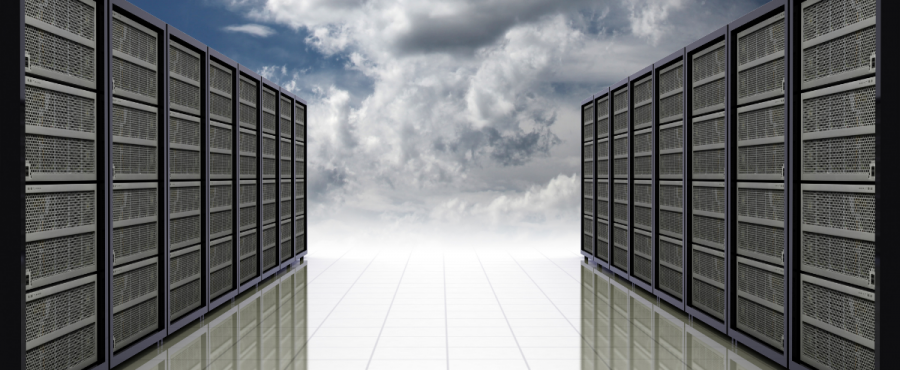
What Are the Benefits of Cloud Computing vs. Colocation?
Many businesses understand that they should be adapting to the changing business landscape, where a remote dedicated small business server backs their online applications and data. Often, business leaders find themselves struggling to understand the differences between the different kinds of technology available to them. Among the most common forms of technology used for data storage by businesses are colocation and cloud computing. If you would like to understand the differences between colocation and using cloud storage for business, continue reading below for expert insight from LightWave Networks.
Read More
What Is a Hyper-Converged Data Center?
Data centers and colocation services are in demand because they make online operations much easier. As technology has advanced, the rise of hyper-convergence has been witnessed. But what is hyper-convergence?

Cloud Computing for Small Businesses
Small businesses are becoming more aware of the benefits that cloud computing provides to them because of how important it is to remotely store the information that they have on their computers. Before cloud storage, small businesses needed to store their information on their local database or hard drive, which meant that they were subject to damage if anything were to happen to their databases, like a flood or electrical damage. Further, without cloud computing for small businesses, it would be impossible for them to make real-time changes to documents without being physically present in the office or point of operation. Below, Lightwave Networks takes a closer look at cloud computing and the value it gives customers.
Read More