
Tag Archives: dedicated server

When to Move From Shared Hosting to Colocation
Shared hosting gives businesses an accessible way to launch and maintain a website without buying equipment or managing a physical server. For many smaller websites, it remains a practical and cost-effective choice.
As a business grows, however, its website and applications may demand more performance, security, customization, and reliability than a shared environment can consistently provide. Lightwave Networks helps businesses evaluate those changing infrastructure needs and determine whether colocation services are the right next step.
Moving from shared hosting to colocation is not simply an upgrade to a larger hosting package. Understanding the difference can help you decide whether your business is ready.
What Is Shared Hosting?
With shared hosting, multiple customers use resources from the same physical server. The hosting provider manages the hardware, operating environment, maintenance, and much of the underlying infrastructure.
This arrangement keeps costs and technical responsibilities relatively low. It can work well for informational websites, smaller online stores, blogs, and organizations with modest traffic and standard software requirements.
The tradeoff is limited control. Customers generally cannot choose their own hardware, make extensive server-level changes, or reserve all system resources for their exclusive use.
What Is Colocation?
Colocation allows a business to place its own servers and related equipment inside a professional data center. The colocation provider supplies the physical environment, including power, cooling, connectivity, physical security, and space.
The customer retains control over the hardware and usually remains responsible for its operating systems, software, and configurations. Some colocation service providers also offer managed support for businesses that need help maintaining their equipment.
Signs Your Business May Be Outgrowing Shared Hosting
A slow website does not automatically mean that colocation is necessary. Performance problems can come from inefficient code, oversized images, outdated plugins, poor database maintenance, or a hosting plan that simply needs more resources.
Colocation becomes worth considering when the limitations are broader and more persistent.
Your Performance Needs Are Becoming Predictable and Substantial
Shared hosting distributes server resources among multiple customers. If your business runs high-traffic websites, resource-intensive applications, large databases, or demanding internal systems, that shared environment may no longer provide enough consistency.
Colocation gives your organization dedicated access to the capacity of its own equipment. You can select hardware based on known workloads instead of relying on the limits of a standardized hosting plan.
You Need More Control Over the Hardware
Most hosting services allow customers to choose among predefined plans. Colocation gives businesses direct control over processors, memory, storage, networking equipment, and other hardware components.
That control may matter when your organization needs specialized configurations, proprietary systems, custom appliances, or equipment that a conventional hosting provider does not offer. AI training, GPU hosting, and other compute-intensive workloads may also require dedicated hardware selected for a specific technical purpose.
Security or Compliance Requirements Have Changed
Growing businesses may face stricter requirements involving data access, system configurations, audit documentation, or physical infrastructure.
Shared hosting can provide appropriate security for many websites, but it offers limited control over the underlying environment. Colocation can give an organization more authority over its own systems while placing the hardware in a professionally operated facility.
The right choice still depends on the specific regulation, workload, and security framework involved. Colocation does not create compliance automatically.
Downtime Has Become More Expensive
A small website may tolerate an occasional interruption with limited consequences. An organization that depends on online transactions, customer portals, internal applications, or real-time data may face much greater costs when systems become unavailable.
Colocation facilities are designed to support reliable operations through redundant power, cooling, connectivity, and physical protections. Businesses can also build redundancy into their own hardware and network architecture.
Your Team Can Manage Physical Infrastructure
Colocation transfers more responsibility to the customer than shared hosting does. Your business must be prepared to purchase, configure, monitor, maintain, and eventually replace its equipment.
That does not mean every task must be performed internally. Colocation managed services may provide remote hands, monitoring, maintenance, or other technical support. The business still needs a clear plan for hardware ownership and system administration.
Should You Move to VPS or Dedicated Hosting First?
For many businesses, the answer is yes.
A virtual private server can provide more dedicated resources and configuration flexibility without requiring the customer to own physical hardware. Dedicated hosting provides access to an entire server operated within the hosting provider’s environment.
These options can be appropriate when shared hosting has become restrictive but the business is not ready to purchase and manage its own infrastructure.
Colocation becomes more compelling when hardware ownership, custom configurations, long-term capacity planning, or direct infrastructure control are central requirements. It should solve a defined business or technical problem, not simply serve as the next item on an upgrade ladder.
Questions to Ask Before Choosing Colocation
Before making the move, identify the systems that will be colocated, their current resource use, expected growth, security requirements, connectivity needs, and tolerance for downtime.
You should also calculate the full cost of ownership. Colocation services pricing is only one part of the investment. Hardware purchases, software licensing, technical labor, maintenance, backups, network design, and equipment replacement may also affect the total cost.
A qualified provider can help evaluate cabinet space, power density, bandwidth, redundancy, physical access, remote support, and future expansion needs.
Is It Time to Move Beyond Shared Hosting?
Shared hosting remains useful when a business needs a straightforward, provider-managed environment for a website with standard requirements.
Colocation may be the right fit when your organization needs consistent performance, greater hardware control, specialized configurations, stronger infrastructure planning, and room to scale its physical systems.
Lightwave Networks provides colocation facilities and infrastructure support for businesses with evolving technology needs. Connect with one of our engineers to discuss your current environment and determine whether colocation, dedicated hosting, or another solution fits your next stage of growth.
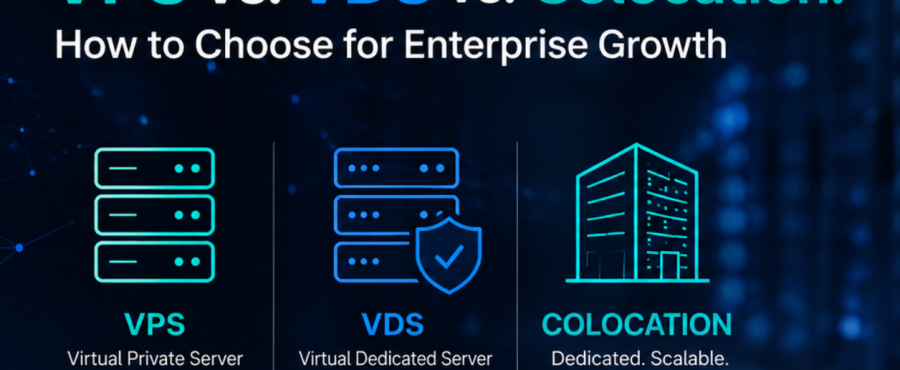
VPS vs. VDS vs. Colocation: How to Choose for Enterprise Growth
Lightwave Networks helps businesses evaluate infrastructure options that can support performance, control, and long-term scalability. For many growing organizations, that evaluation starts with a simple question: should the business use a VPS, move to a VDS, or consider colocation?
A virtual private server can be useful when a company needs flexible hosting without managing physical hardware. A virtual dedicated server may be a better fit when the business needs more predictable virtual resources. Colocation becomes more relevant when growth requires dedicated hardware, stronger control, private networking, or a data center environment built around long-term infrastructure planning.
What Is a VPS?
A VPS, or virtual private server, is a virtualized server environment created from part of a physical server. It gives the customer access to allocated resources and administrative control, while a provider manages the underlying hardware.
VPS hosting can work well for websites, applications, and business systems that need more control than basic shared hosting. It is often practical when a company wants hosting flexibility without purchasing or managing physical hardware.
The limitation is that a VPS still depends on the provider’s virtualized infrastructure model. Performance, resource allocation, and scalability can vary by plan, configuration, and provider design. For systems that need predictable performance, a VPS may eventually feel restrictive.
What Is a VDS?
A VDS, or virtual dedicated server, is also virtualized, but it is usually positioned around more dedicated resource allocation. In many provider models, a VDS gives the customer reserved CPU, RAM, storage, or bandwidth resources that are less affected by other users on the same physical infrastructure.
That makes a VDS useful when a business wants the deployment advantages of virtualization but needs more predictable performance than a basic VPS plan may provide. A VDS may fit heavier applications, production systems, or business workloads where resource consistency matters.
The tradeoff is that a VDS still keeps the business inside a provider-controlled virtual environment. It can offer more consistency than a VPS, but it does not provide the same hardware ownership, physical access, or infrastructure control that colocation can support.
How Is Colocation Different?
Colocation is different because the business owns or controls the physical hardware and places it inside a third-party data center. The colocation provider supplies the facility environment, including space, power, cooling, security, network access, and support options.
For enterprise growth, colocation becomes relevant when infrastructure needs move beyond renting virtual resources. A business may need dedicated hardware, predictable performance, compliance control, specialized equipment, private networking, or long-term cost planning around physical assets.
Colocation is not automatically the right choice for every growing company. It creates more responsibility because the organization must plan, own, and maintain its hardware. However, it can be a stronger fit when control, durability, and infrastructure customization matter more than virtual-server convenience.
VPS vs. VDS vs. Colocation: What Should Businesses Compare?
The clearest comparison starts with the workload. If the business needs fast deployment, modest control, and flexible hosting for standard applications, a VPS may be enough. However, if it needs stronger resource consistency but still wants a virtualized environment, a VDS may be more appropriate. Also consider if it needs control over physical infrastructure, as colocation may be the better long-term model.
Performance is one of the biggest decision points. VPS performance depends on the provider’s resource allocation and shared-hardware design. VDS hosting is generally built to provide more predictable virtual resources. Colocation gives the business direct control over the hardware profile, which can support workloads that need dedicated compute, storage, or network architecture.
Scalability also looks different across the three models. VPS hosting can scale by changing plans or adding instances. VDS hosting can scale through larger virtual resource allocations. Colocation scales through physical infrastructure planning, including rack space, power capacity, bandwidth, cross-connects, and hardware expansion.
Operational responsibility is another key difference. VPS and VDS models shift more infrastructure management to the provider. Colocation gives the business more control but requires more planning around equipment, lifecycle management, and technical support.
How Does Enterprise Growth Affect the Decision?
Enterprise growth means a company is moving toward more sustainable, scalable operations. That can include revenue growth, new markets, larger customer bases, more complex applications, stronger security requirements, or more demanding internal systems.
A hosting model that works during an earlier stage may not support the next stage well. A VPS may be practical when the priority is speed and cost control. A VDS may help when workloads need more predictable resources. Colocation may make sense when the business needs dedicated infrastructure for long-term performance, compliance, networking, or operational resilience.
A company should choose the model that matches the current workload and the next phase of growth. Waiting too long can create performance limits, migration pressure, or infrastructure risk.
Choosing the Right Infrastructure Path
A VPS, VDS, and colocation data center each support a different stage of infrastructure growth. VPS hosting offers accessible virtual-server flexibility. VDS hosting can provide a more dedicated virtual-resource model. Colocation services support businesses that need physical infrastructure in a secure, professionally managed data center environment.
Lightwave Networks provides colocation services, cloud servers, VPS servers, and related infrastructure services for businesses evaluating how their systems should scale. If your organization is comparing VPS, VDS, and colocation options, start with the workload, control requirements, performance needs, and growth plan. Contact one of our engineers to discuss an infrastructure path that fits your next stage of growth.
VPS, VDS, and Colocation FAQs
What is the difference between VDS and VPS?
The main difference between VDS and VPS is resource allocation. A VPS uses allocated resources on shared physical infrastructure. A VDS is typically positioned with more reserved resources for more predictable performance.
Is colocation better than a VPS?
Colocation is not automatically better than a VPS. It is better suited for businesses that need physical hardware control, predictable infrastructure, private networking, or long-term data center capacity.
When should a business move from VPS to colocation?
A business may consider moving from VPS to colocation when virtual hosting no longer provides enough control, consistency, compliance support, or infrastructure flexibility.
RELATED READINGS:
Colocation Pricing Models Explained: Space, Power, and Bandwidth Costs